– Sneak Preview –
This multicultural exhibition is a work in progress, but we couldn’t keep it to ourselves! Enjoy this preview; savor each work of art, slowly—just as you would in a physical space—and come back as our exhibition continues to grow. We welcome your comments below.
Countless paintings and drawings of siblings, young and old, take the form of traditional, forward-looking portraits, often by commission, or in more recent decades, images of the backs of siblings walking down a path or sitting in a park.
For this exhibition, works were not only selected for their artistic merit, but also for how they illuminate the unique, often complex relationships between siblings. At times, a glance or gesture may seem innocuous, yet meaningful enough for the artists to consider and portray, inviting deeper reflection on the human condition.
Many of these works of art are cited as personal favorites by reviewers. Which ones resonate most with you?
Your generous donation will help us add additional works and create a more interactive gallery experience.
Sofonisba Anguissola, Three Siblings of the Gaddi Family with Dog, c. 1555-1560. Italy.

Ralph Earl, Portrait of Two Brothers. ca. 1790. USA.

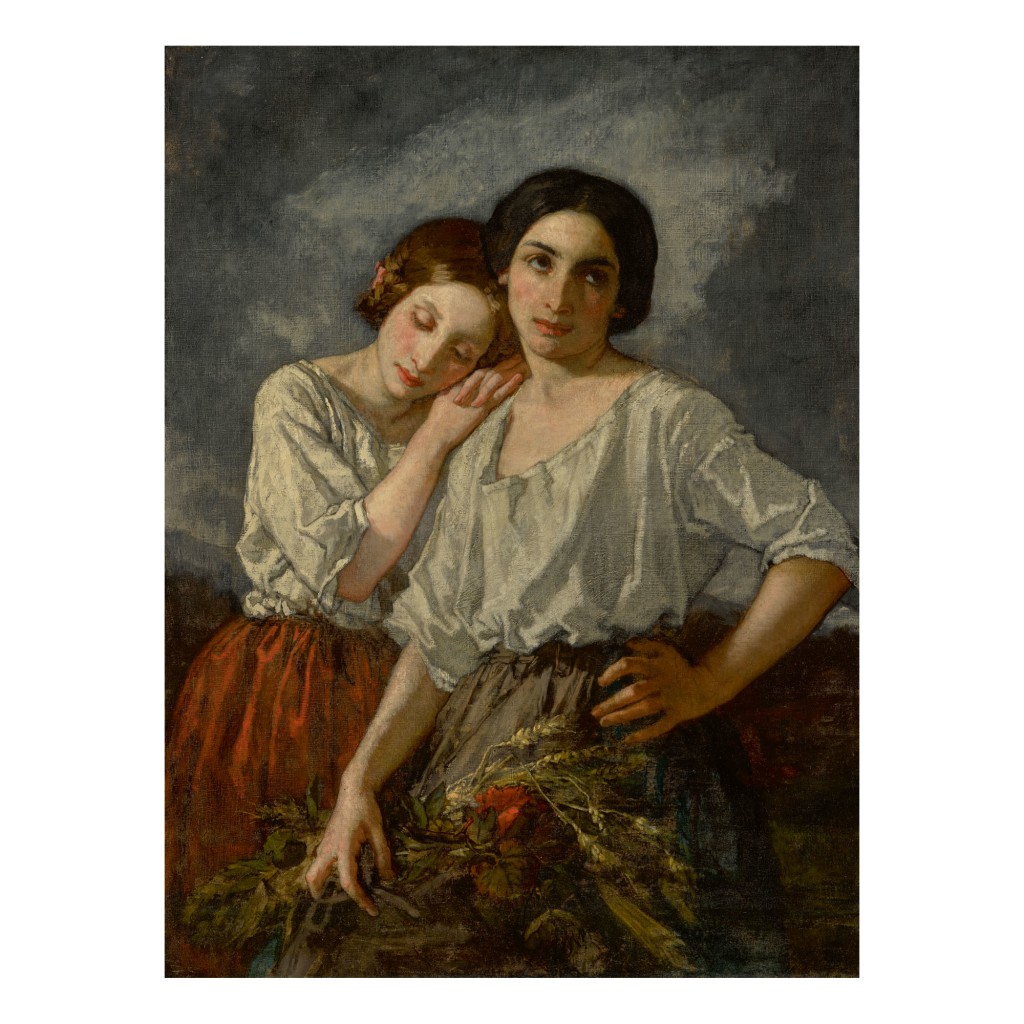
Thomas Couture, Two Sisters. 1792. France.
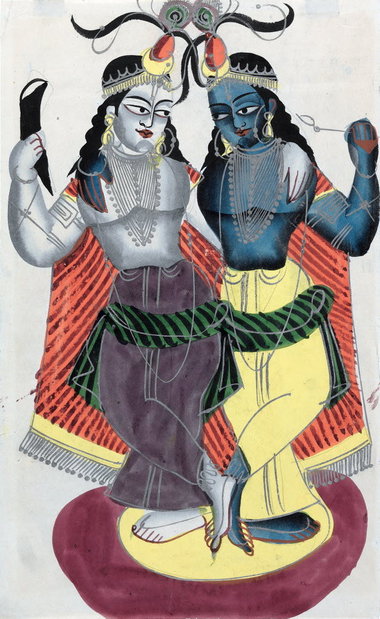
Anonymous, Siblings Balarama and Krishna. 1800s. India.
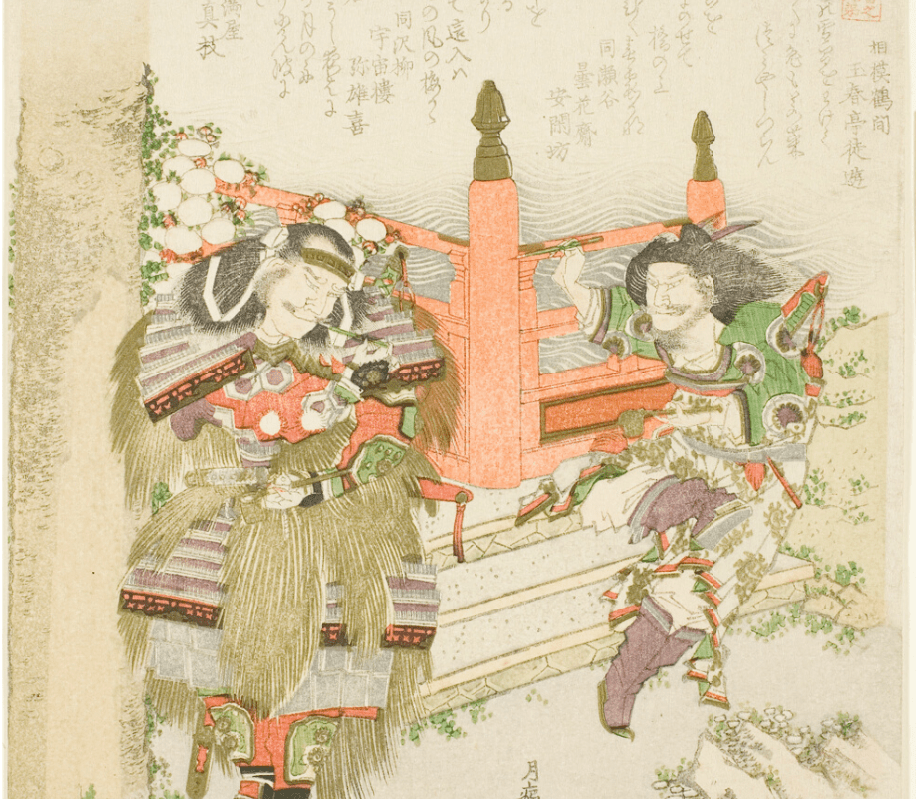
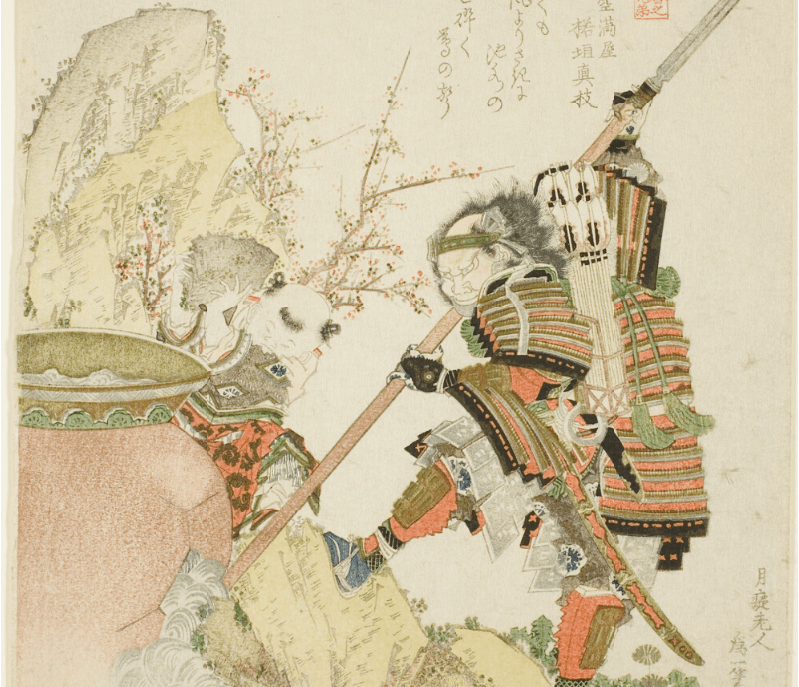
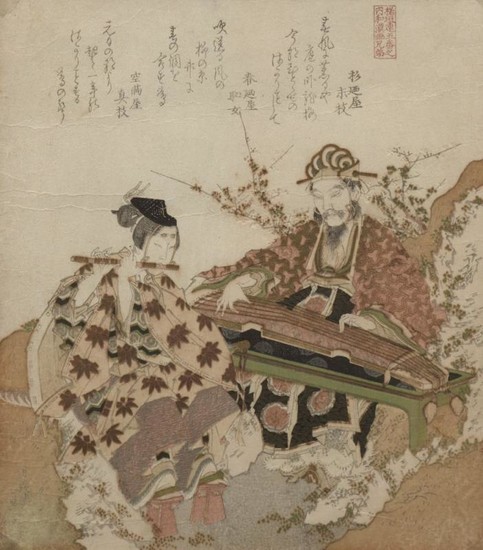
Katsushika Hokusai, Five Sibling Pictures of China and Japan for the Zakurogaki Group. 1821-2. Japan.

Theodor Hildebrandt, The Murder of the Sons of Edward IV. 1835. Germany.
A painting based on Shakespeare’s play, King Richard III. It depicts a scene of the two sons of Edward IV sleeping, secure in each other’s arms with a Bible and rosary by their side, just before they were murdered at the order of King Richard III. The conflicted scene generated strong emotional reactions by Hildebrandt’s contemporaries, and still. It is regarded as a highlight of the Düsseldorf School of Painting.

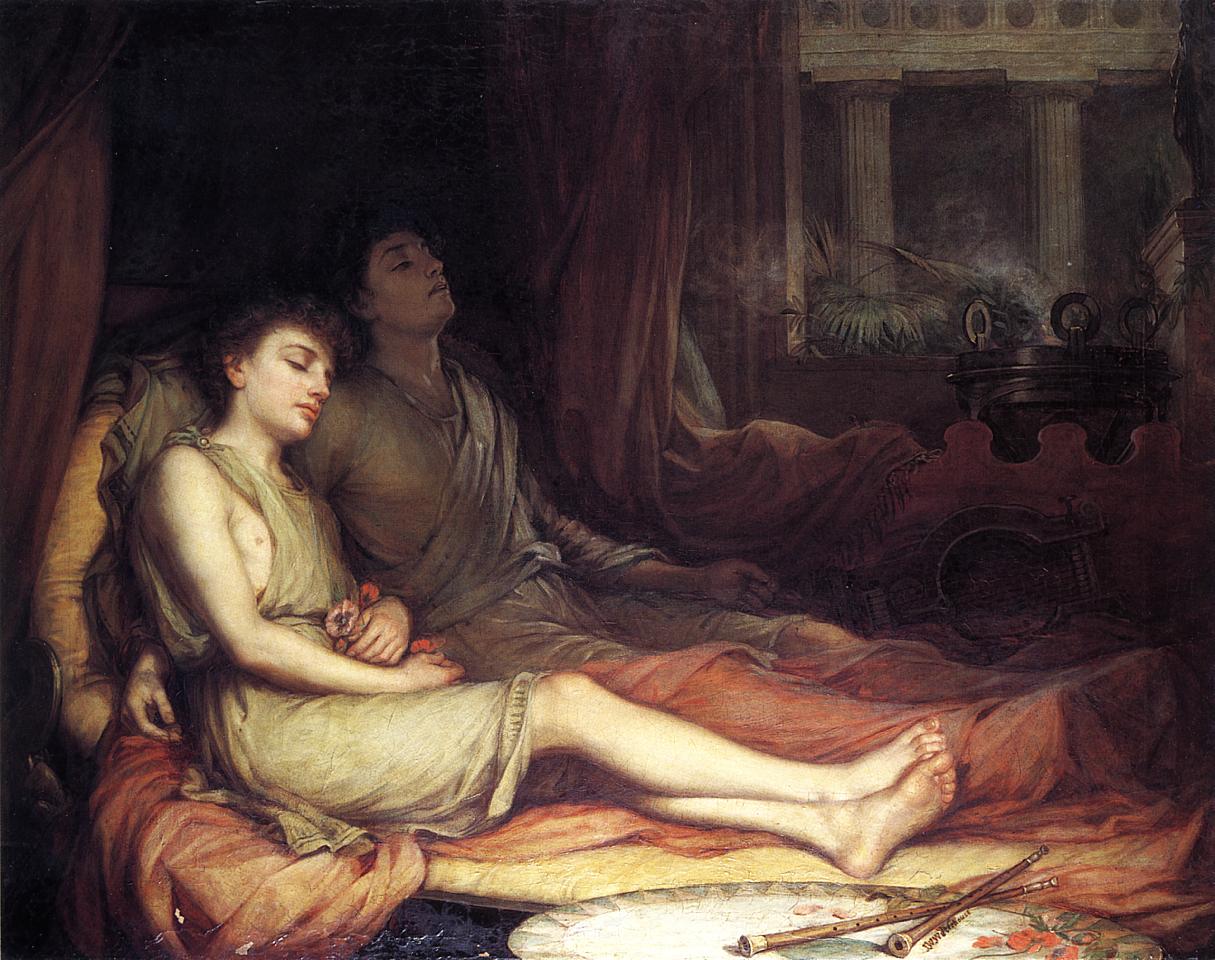
John William Waterhouse, Sleep and his Half-brother Death. 1874. UK.
Echoing the composition of Hildebrandt’s painting above, we find this moving portrait of two brothers, referencing the Greek myth of Hypnos (sleep) and Thanatos (death). The painting is a reflection on Waterhouse’s two younger brothers who had recently died of tuberculosis, the same illness that took his mother’ life in 1852. Devastated, the artist painted to make sense of such tragedy – these brothers enraptured in peace and love. This painting was the first of his paintings to be featured in the Royal Academy exhibition in 1874, with many others exhibited thereafter. Read more.
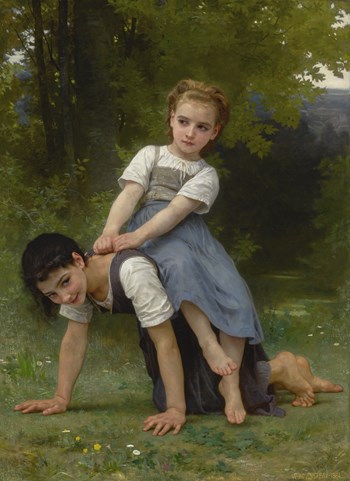
William-Adolphe Bouguereau, Les Deux soeurs (The two sisters) [a.k.a. La bourrique], 1884.
Abbott Handerson Thayer, Brother and Sister (Mary and Gerald Thayer). 1889. USA.

Edvard Munch, Death in the Sickroom. 1893. Norway.
In the same year he painted The Scream, Munch painted this scene, from memory, of his family with his sister Sophie (age 15), who was suffering from tuberculosis, and sitting in the wicker chair. Munch was 14 at the time of her death. His two other sisters are in the foreground, he behind them, and their brother stands to the left. They are all besides themselves in silence; only Edvard looks to Sophie, but from a distance.. Such is the weight of a sibling’s death. This is just one of the paintings he did memorializing the deaths of family members (read more here).

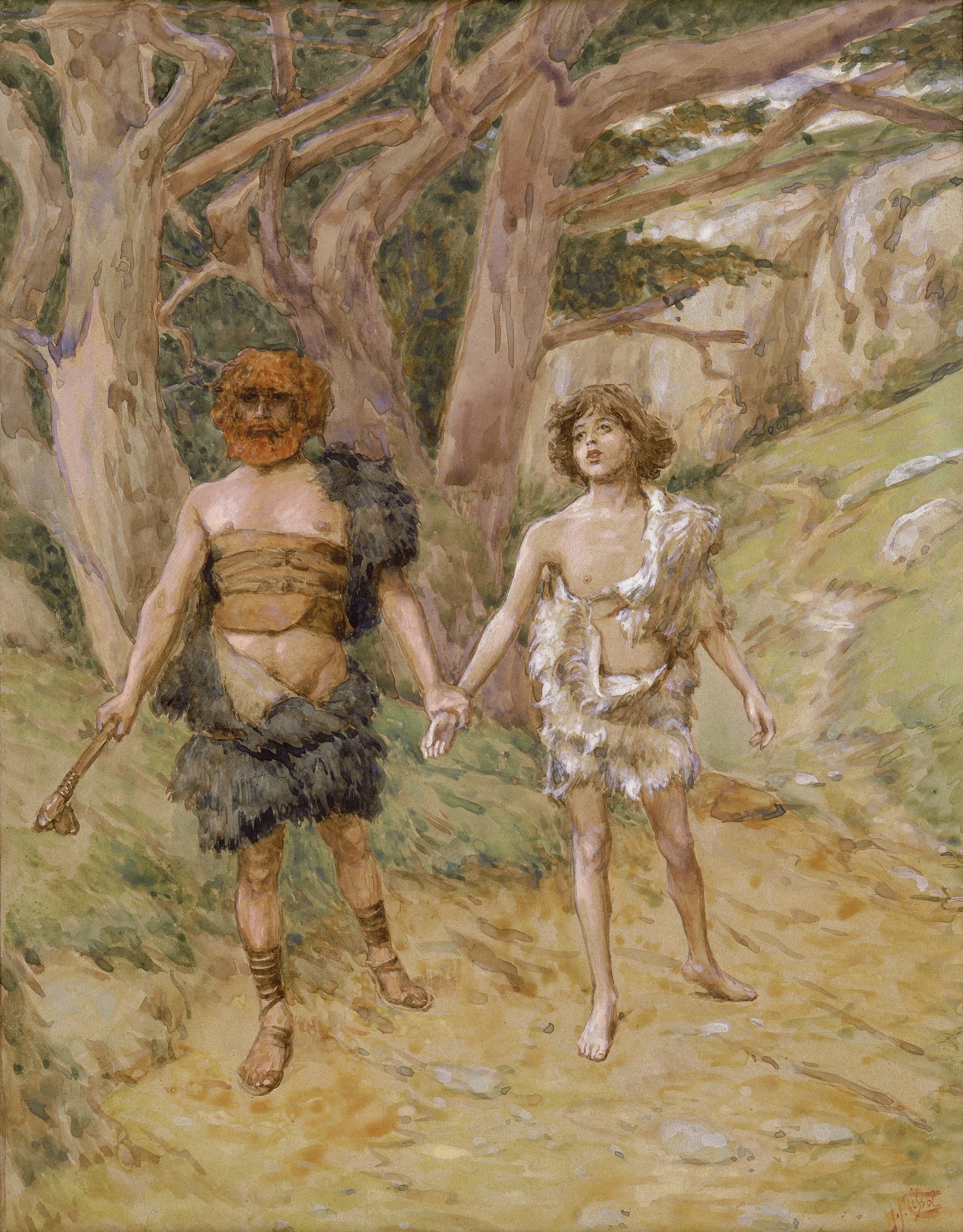
James Tissot, Cain Leadeth Abel to Death, c. 1896-1902. France.
Many works of art depict the two most famous and tragic siblings – Cain and Abel. Appearing at the dawn of humankind, their story forces the question: what does it mean to be human? Usually, artists imagine a scene where Cain kills Abel. Tissot’s depiction is even more insidious. Here we see Cain, in full beard, leading his younger brother by the wrist – an aggressive, domineering gesture and foreshadowing of what’s to come. Cain is wearing sandals, Abel is barefoot. These are not figures transposed from modern times – there is a wildness to them, one generation from parents formed from the earth. Unlike many paintings of the era (or in this collection), there is no dramatic contrast in light, tone or color between the boys and the rugged landscape – they are one. We might expect Cain to be hairier, but the garments of animal skins convey their roughness, and violence. Still, Abel’s innocence is conveyed in a stereotypical white, while Cain’s darker garment falls across his loins. Abel does not protest. He may be wondering where he is being led, but a sense of trust ensues. After all, Cain is his big brother. How many of us descended from Cain?
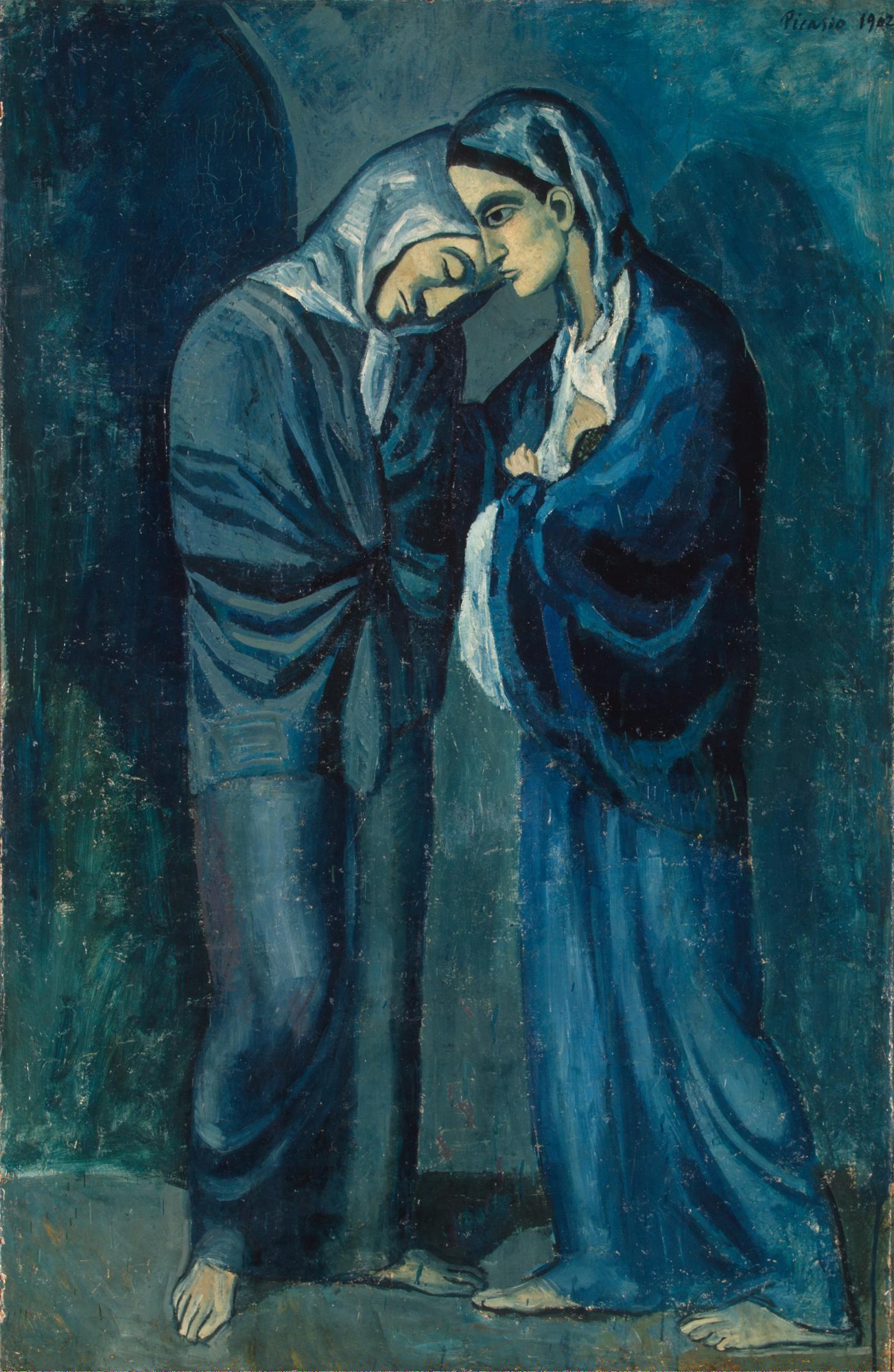
Pablo Picasso, Two Sisters (The Meeting). 1902. Spain.
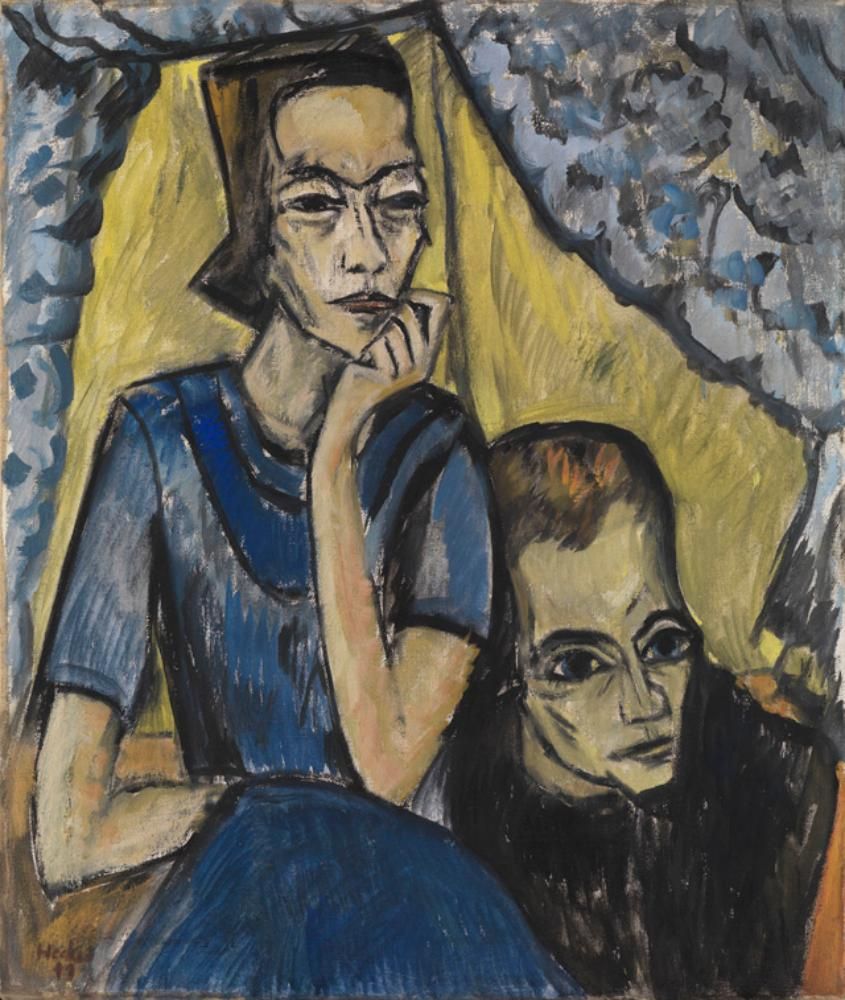
Erich Heckel, Siblings (Geschwister). 1913. Germany.

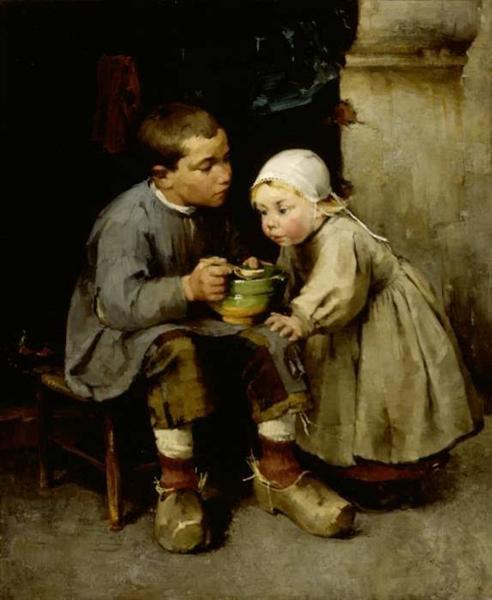
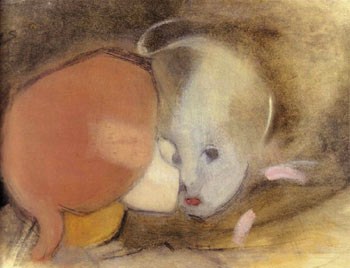
Helene Schjerfbeck, Siblings. 1881 & 1913. Finland.
One of Finland’s most beloved artists, Schjerfbeck illustrates siblings, from a charming scene in an academic realist style, to the intimacy conveyed in her more abstract work some 30 years later, inspired by French Modernism. “I’ve preferred to paint poor sensitive children, I don’t know if anyone’s interested.” (Letter to Einar Reuter, 8 January 1918)
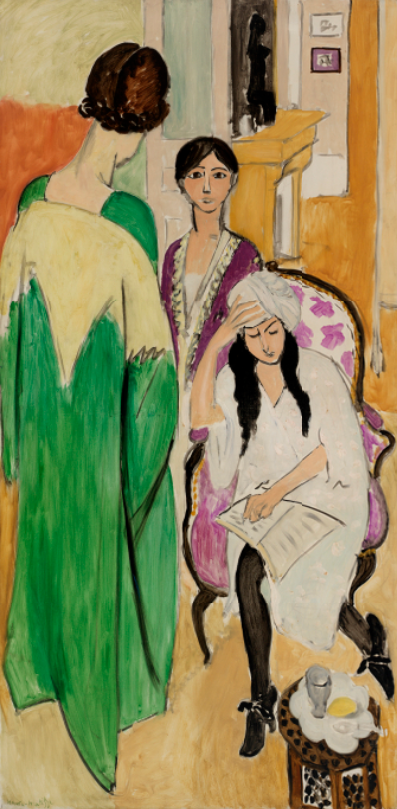
Henri Matisse, Three Sisters with an African Sculpture. 1917. France.
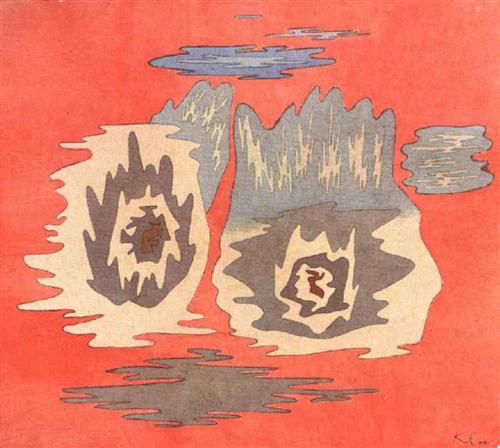
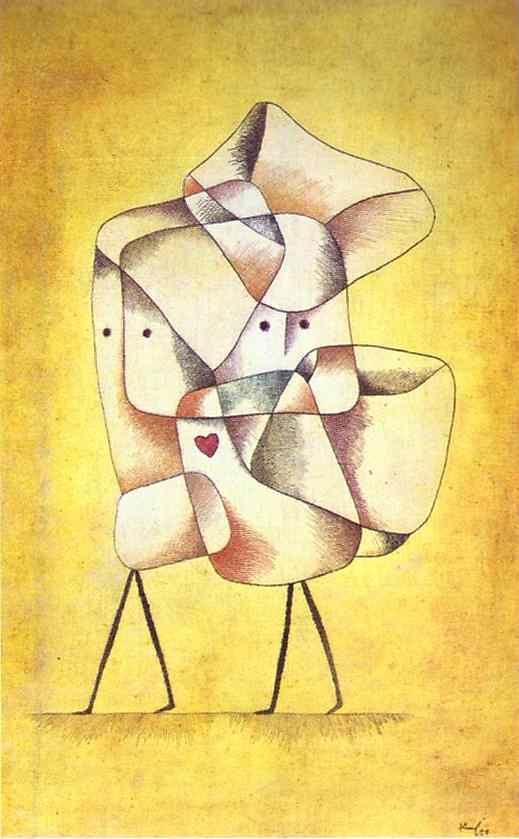
Paul Klee, Sibling Art, 1929-30. Germany via Switzerland.


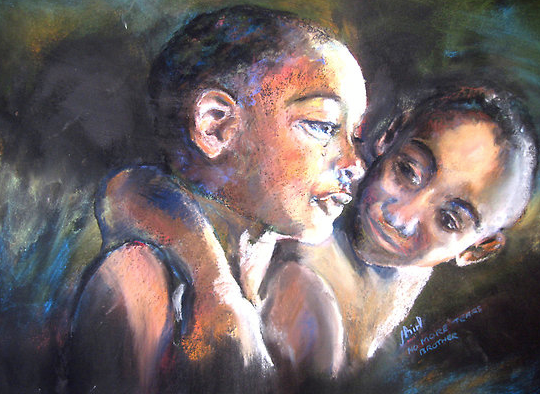
Shirley Charlton, No More Tears Brother. 2009. Malawi.
Look at those faces! The offer of gentle kindness, touched by subtle inquisitiveness, to a brother deep in his feelings. Highlighted by lights and darks, such intimacy is rarely seen in art. From the artist’s Malawi period. View Charlton’s other paintings at shirleycharlton.com.
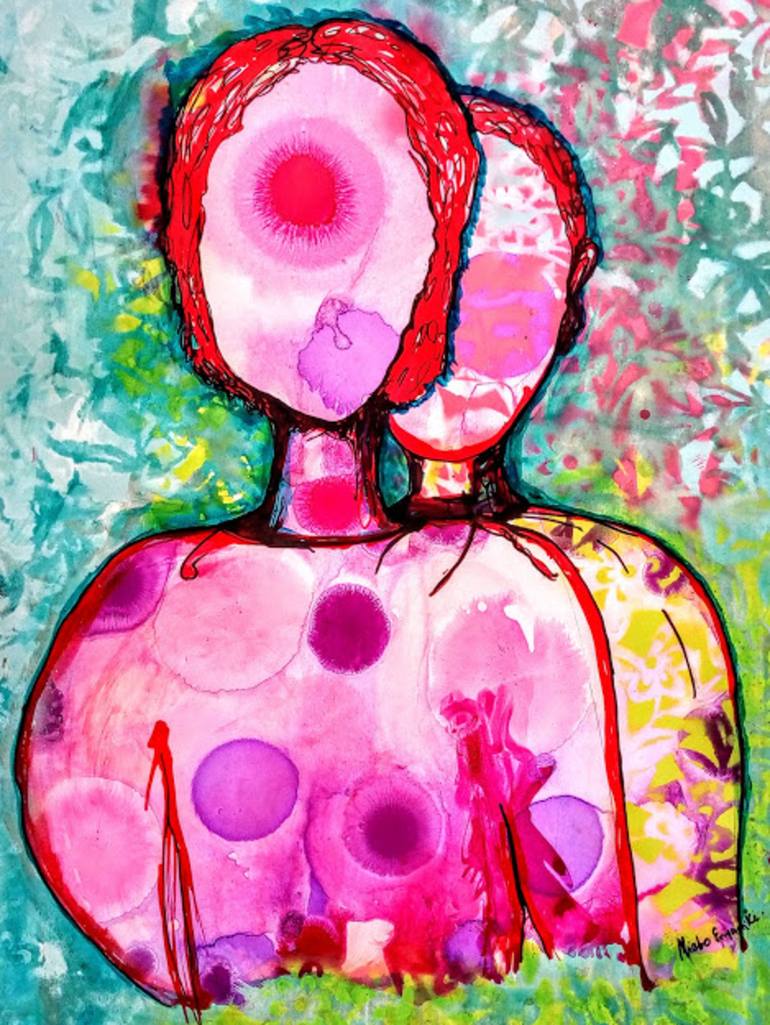
Miabo Enyadike, Sibling Rivalry. 2020. South Africa.
Artist Statement: “Siblings, some of us have some don’t, some siblings bring us great joy, while some bring us much sorrow. My painting is one of rivalry between two siblings, where one overshadows the other and that creates a lot of emotional despair.” Represented with high intensity color. For sale on Saatachi Art.
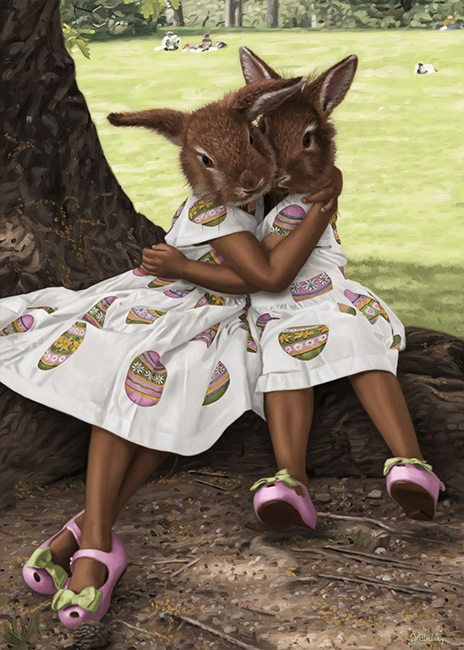
Matthew Grabelsky, Cadbury Bunnies, 2020. USA.
This commissioned portrait of two loving sisters was reimagined as bunny-girl hybrids hugging beneath a favorite tree in Central Park, NYC. Read the story here. See more of Grabelsky’s art here.
Alexandra Grant, Clairsentience, 2021. USA.
The final painting in this exhibition is Clairsentience, by Alexandra Grant. ‘Clairsentience’ is the term given to the psychic ability to not only empathize with another’s perceptions and feelings, but to also understand the history and context without being told beforehand. This painting is part of a series offering Grant’s interpretation of Sophocles’ story of Antigone, a Theban princess who attempts to give her brother, Polynices (killed in a war with another brother), a proper burial, under threat of death by the new king. She affirms, “I was born to love, not to hate.”
Unlike other artwork in this exhibition, the relationship between siblings is not confined to depictions of figures, but rather is expansive, spiritual, has no boundaries, transcends gender roles, and moves beyond the canvas’ border. It is organic and layered. It undulates and reverberates through earth colors and amorphous shapes. It vibrates, as a heartbeat, oscillating between mournful sighs and the urgency of prayer. Love lives on.
See more of Grant’s art here.

 Family Spirals®